)
How surplus transport tarpaulins became practical products and paid employment opportunities
SisterWorks partnered with Alstom and the Department of Transport and Planning (DTP) through CircularWorks to transform surplus industrial tarpaulins into practical products with environmental and social impact.
The collaboration demonstrates what becomes possible when circular economy thinking, social procurement and local manufacturing work together.
THE CHALLENGE
Marine-grade transport tarpaulins were identified as a significant waste stream within Alstom’s operations, with an estimated two tonnes going to landfill each year.
These tarpaulins are durable, high-performance materials designed for demanding transport environments. But once they reach the end of their original use, they are difficult to recycle and often become part of a challenging industrial waste stream.
Alstom and DTP partnered with SisterWorks to explore a practical reuse pathway. The goal was clear: extend the life of the material, reduce landfill and create meaningful work opportunities for women from migrant, refugee and asylum-seeker backgrounds.
THE CIRCULARWORKS SOLUTION
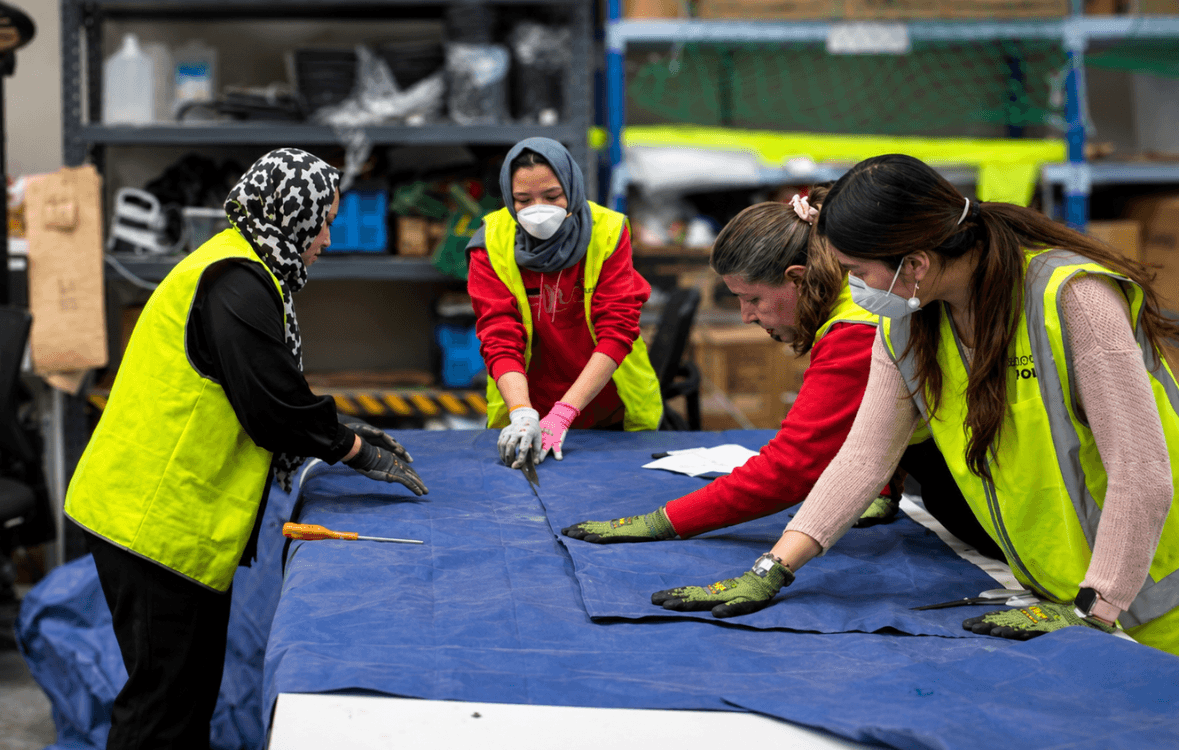
Through CircularWorks, SisterWorks worked with Alstom and DTP to collect, assess, design, prototype and manufacture new products from surplus marine-grade tarpaulins.
SisterWorks managed the end-to-end process, from safe collection at Alstom’s Dandenong facility to material traceability, design development and production at the SisterWorks Manufacturing Hub.
The project transformed a complex industrial material into durable, functional products with real-world use.
“This circular economy initiative, delivered in partnership with the Department of Transport and Planning and SisterWorks, is a strong reflection of Alstom’s commitment to Corporate Social Responsibility. By reducing waste, supporting diverse and local suppliers, and creating inclusive employment pathways, we’re turning our sustainability and social procurement goals into tangible, lasting impact—for both the environment and the communities we serve.”
— Viviane Hennequin, Social Procurement Lead, Alstom
WHY THIS PROJECT MATTERS
This pilot shows how circular economy principles can be embedded into industrial supply chains.
By repurposing a challenging waste stream, Alstom and SisterWorks reduced landfill, tested a scalable reuse model for the two tonnes of tarpaulin waste generated annually and created practical products through local manufacturing.
For SisterWorks, the project also created paid, skills-based work for Sisters at the Manufacturing Hub. Women gained hands-on experience in production, material handling, quality control and product development while contributing to a circular economy solution.
“Partnering with Alstom, SisterWorks turned two tonnes of marine-grade tarps into durable products and paid, skills-based jobs for migrant and refugee women, diverting landfill, cutting CO₂ emissions and boosting local content. This is social procurement in action: practical, scalable and strengthening rail-ready supply chains. Alstom is setting the standard for the transport industry.”
— Shamila Gopalan, Chief Commercial Officer, SisterWorks
A GROWING PARTNERSHIP
The Alstom and SisterWorks relationship began in 2023 and continues to grow through a shared commitment to sustainability, inclusive employment and local innovation.
Together with DTP, this project has shown how industrial challenges can be reimagined into practical products, employment pathways and measurable community impact.
It also sets a strong precedent for circular economy solutions across the transport sector and beyond.
COULD YOUR MATERIALS HAVE A SECOND LIFE?
CircularWorks partners with organisations to transform surplus materials into practical products through local manufacturing and social procurement.
If your organisation is exploring circular economy solutions, ESG outcomes, social procurement or material reuse, SisterWorks can help identify what is possible.